


By Amin Gharebaghi, CEO and Co-Founder, GeoMate
Waymo is targeting its first Toronto riders in 2028, with a phased approach beginning with manual mapping and supervised testing, subject to the required approvals. Its arrival creates an opportunity to prepare for autonomous mobility through local evidence and coordinated planning.
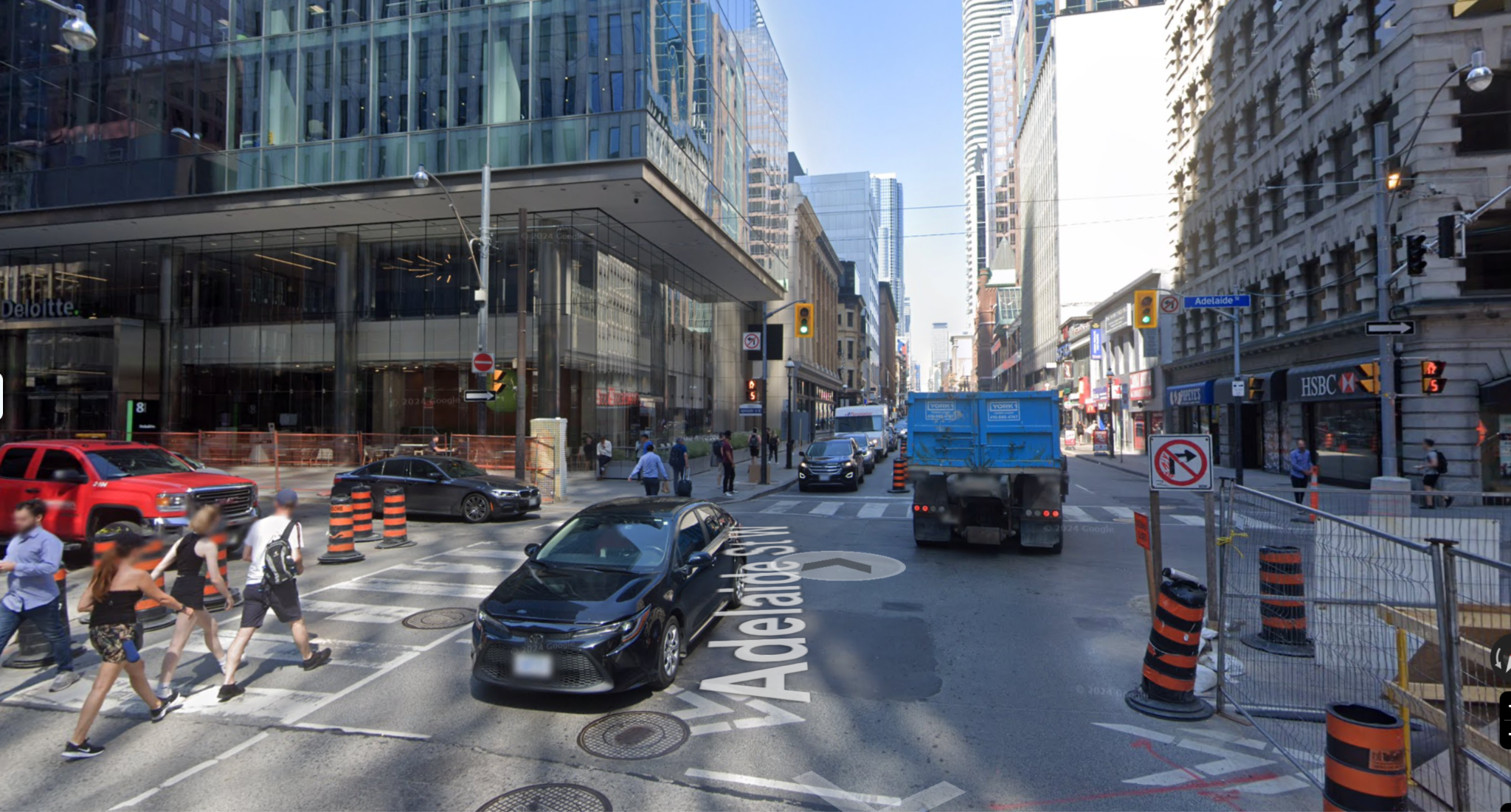
Toronto’s streets present a demanding mix of streetcars, cyclists, pedestrians, construction and winter conditions. Preparing for autonomous deployment means identifying which locations and intersections need particular attention, what evidence is needed to assess them, and how changing street conditions will be addressed.
Consider a turning vehicle approaching a crossing beside temporary lane barriers. Changes in visibility, traffic or pedestrian timing can alter the situation significantly. Readiness means understanding how such interactions will be evaluated within the service’s proposed operating conditions.
Simulation provides a way to investigate these situations repeatedly and vary selected conditions without deliberately creating hazards on public roads. Transport Canada’s testing guidance recognizes simulation among validation methods and recommends an iterative approach alongside other testing. Results depend on suitable models, reliable data and validation against real-world observations.
GeoMate’s OVIN-supported Toronto Pilot Zone (TPZ) project with the city provides a practical foundation. The work covers approximately 50 intersections and combines digital environments, municipal safety and traffic datasets, risk mapping, and synthetic scenarios.
These environments recreate actual street layouts and support exploration of interactions among road users. Local risk information can help identify where to focus attention, while scenarios make selected situations repeatable. A potential next step is to build on this foundation with operators and public authorities to develop tests relevant to autonomous deployment. Evaluating a particular driving system requires appropriate integration or cooperation with its operator.
Through RealSimE, GeoMate can contribute simulation-ready maps, digital environments and scenarios built around specific local questions. A focused readiness study covering representative corridors and complex intersections would be a practical starting point.
Waymo’s planned arrival gives Toronto time to connect its local road-safety knowledge with repeatable testing. That work can help public authorities and operators make better-informed decisions as autonomous mobility becomes part of the city’s transportation network.


